
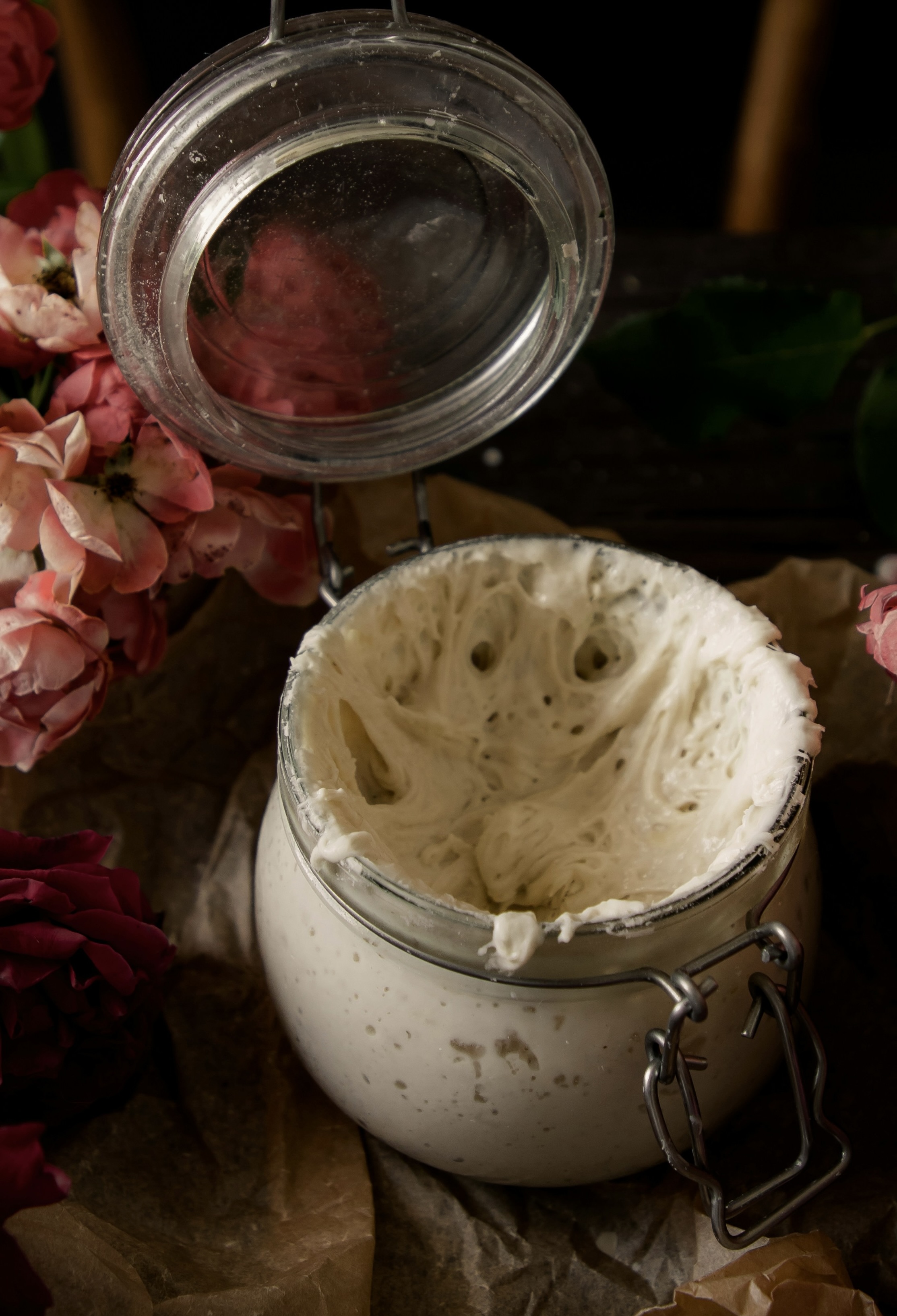
Sourdough Starter Culture
Quick Activating and Resilient
A$24.00
This Sourdough Starter is designed for those who want a sourdough starter that’s easy to activate, simple to maintain, and consistently produces a great sourdough flavour with a reliable rise. All you need is the packet of starter culture, some flour and water to get you started.
All types of flour can be used to produce a quick activation and fast fermentation. With regular feeding it will remain active for as long as you need it.
The starter is organic and fully natural, with no preservatives, additives, artificial colours or flavours. It contains no GMO ingredients and it is gluten free
This is an heirloom starter with freeze-dried live active bacteria and yeasts. Made with live active lactic acid cultures (incl. Lactobacillus brevis, Lactobacillus casei, Lactobacillus bulgaricus) and yeasts (incl. Saccharomyces Boulardii).
Each sachet contains loose powder mix, of the strains required to make an excellent live active sourdough starter. The Sourdough starter comes in 6 gram packs, produced in Bulgaria, which can be stored in the refrigerator for 1 to 2 years before use. Sealed in Aluminium foil pouches 100% recyclable.
If you already have a long-standing sourdough starter, Bacillus Bulgaricus starter can add a healthy boost of new lactic acid cultures not typically found in local starters.
Activating the Starter
This first stage is about bringing the freeze-dried starter from your pack back to life.
You'll need a container to activate and later store your live starter (levain) in. Some people prefer a lid, others just drape a cloth over the top, anything that keeps contaminants out. A 1litre glass jar would be good, just make sure it's clean.
Pour the whole contents of the Sourdough Starter sachet into your container.
Mix in 75 g of flour (roughly 4 tablespoons) with the starter powder.
Note: Any flour will work, preferably organic. High-gluten varieties like all-purpose, bread and white. Whole wheat, and rye give the best results. Preferably organic flour.Pour in 75 ml of water, about 6 tablespoons.
Stir thoroughly until the mixture is smooth with no lumps (a few tiny lumps are fine).
Note: You're aiming for something like a thick pancake batter or oatmeal, but don't stress if yours is thicker or thinner, since the starter is quite forgiving either way.Loosely cover the jar, with a lid or cloth.
Note: Avoid sealing it airtight. The feeding process releases CO2, and pressure can build up in a tightly closed container (so if you do seal it, open it carefully).Set the jar somewhere dark at room temperature, like inside a cupboard. Aim for somewhere around (21–24°C), this range keeps fermentation moving at a good pace without rushing it. If your kitchen is cooler, activation may take longer. The following day (or after 12–24 hours), feed it again: another 75 g of flour and 75 ml of water, mixing well.
7. Before each feeding, discard all but about 75 g of the mixture, then feed it with another 75 g of flour and 75 ml of water, mixing well. Keep repeating this feeding cycle every 12–24 hours until the starter is ready.
Note: You'll know it's ready once it turns bubbly and roughly doubles in size.
Once you reach this point, your starter is fully activated, you now have a live levain (starter) ready for baking.
Keeping Your Starter Alive
Once your levain is active, you'll want to keep it healthy for future bakes. Here's how to maintain it long-term:
If you bake often (a few times a week):
Keep your starter at room temperature and feed it once a day. At each feeding, discard all but about 75 g of the starter, then feed it with equal parts flour and water (for example, 75 g flour and 75 ml water). This keeps it strong and ready to use whenever you need it.
If you bake occasionally (once a week or less):
Store your starter in the fridge, the cold slows down fermentation, so you don't have to feed it as often. Feed it once a week using the same discard-and-feed method above, then pop it back in the fridge. About 12–24 hours before you plan to bake, take it out, feed it, and let it sit at room temperature until it's bubbly and active again.
A few tips for a happy starter:
Discarding matters. Removing a portion before each feeding keeps the jar from overflowing and gives the remaining culture fresh food to work with. You can toss the discard or save it for recipes like pancakes or crackers.
Watch for signs of life. A healthy starter should smell pleasantly tangy or yeasty. A thin layer of grey liquid ("hooch") on top is normal if it's hungry. Just stir it back in or pour it off before feeding.
If it's sluggish, feed it more often. A starter that's been neglected for a while may need a few consecutive daily feedings at room temperature to bounce back before it's strong enough to bake with.
Going away for a while? You can leave a fridge-stored starter unfed for a couple of weeks in a pinch, it may need an extra feeding or two to recover once you're back, but it's more resilient than people expect.
As long as you keep feeding it, your starter can last indefinitely, some sourdough cultures have been kept alive for decades, even generations.
Happy Baking
Taradale, Victoria. Australia 3447